How to Get Real Value From Early Childhood Leadership Conferences
Why Conferences Do Not Always Create Change
Most directors return from conferences inspired and overwhelmed at the same time.
Conferences can energize childcare leaders. We go to a dozen or more each year, hoping to add our bit to energy and potential transformation.
You attend sessions.
You fill pages of notes.
You collect vendor information.
Then you return to your childcare center, and daily operations take over. Within a week, most of those notes sit untouched.
The problem is not the conference.
It is the approach.
How to Attend a Leadership Conference With Intention
Conferences are most helpful when leaders and educators attend with intention. Make a plan before you go. What are your goals?
Do you want to meet two other directors you can add to your network? Do you want to find potential solutions to staff morale issues or classroom challenges? Do you want to evaluate your software options? By planning 3-4 objectives before you go, you’ll select sessions that fit your current needs and use your time in the exhibitor hall well.
Once in sessions, instead of trying to absorb everything, focus on listening for patterns. Clear goals help you choose sessions. Pattern awareness helps you interpret what you hear.
Ask yourself:
What keeps coming up across sessions?
What challenges are other directors naming that sound familiar?
What feels uncomfortable because it is true?
Patterns matter more than isolated ideas.
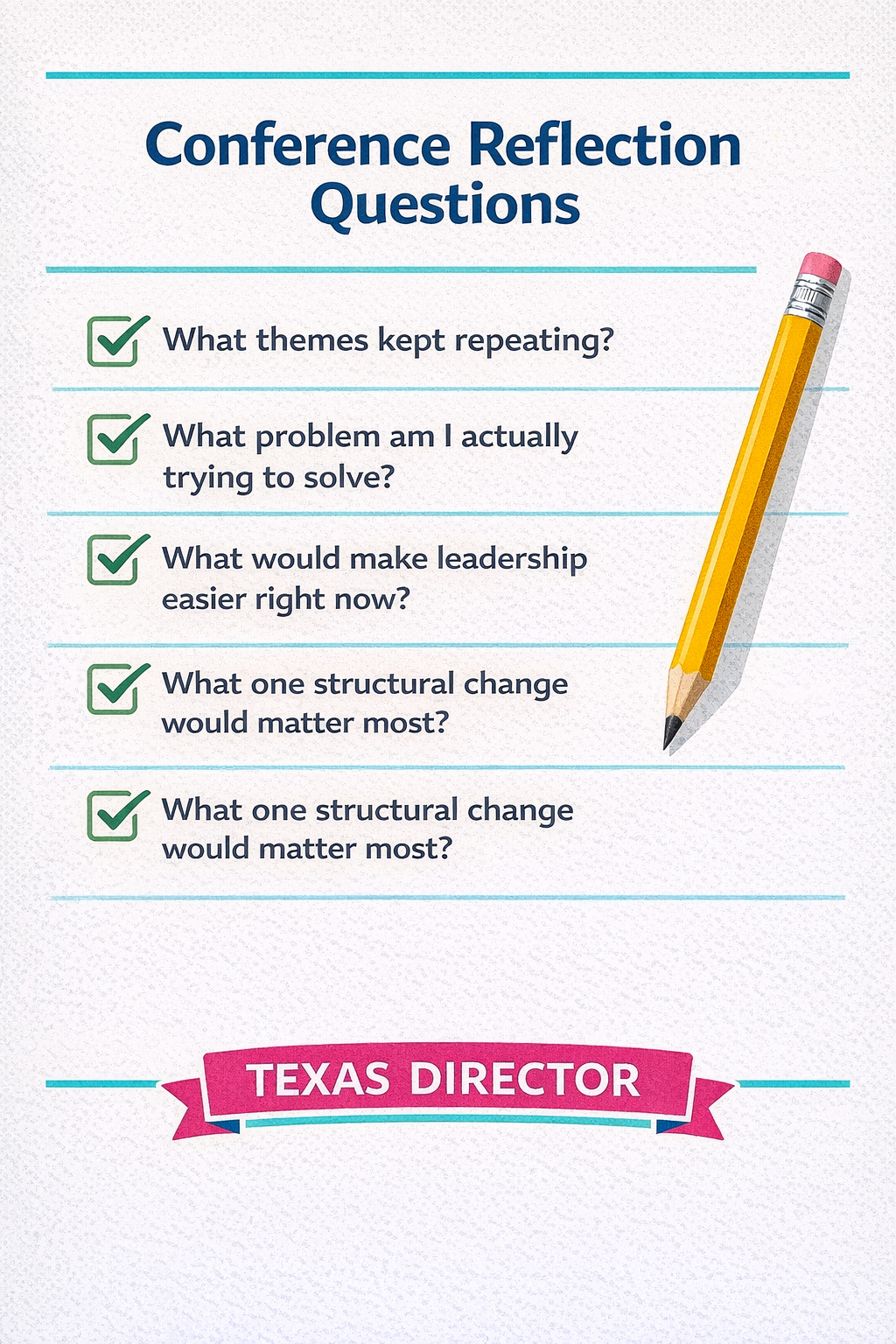
Step 1: Choose a Theme Before You Arrive
Before attending, decide what you are listening for.
Staff retention?
Leadership clarity?
Enrollment stability?
Personal bandwidth?
When you define your focus in advance, sessions become filters instead of noise.
Step 2: Look for Repeated Signals
When the same issue appears in multiple sessions, conversations, or keynote messages, pay attention.
If three different presenters mention staff burnout, that is not a coincidence. If hallway conversations keep circling back to unclear roles or systems, that is data.
Do not try to fix everything. Notice what repeats.
Step 3: Leave With One or Two Structural Adjustments
A productive early childhood leadership conference does not end with a long to-do list. It ends with one or two decisions.
Ask:
What single system adjustment would reduce friction in my childcare center?
What clarification would prevent repeated conflict?
What conversation have I been postponing?
In our experience working with directors across Texas, the leaders who implement one structural change consistently outperform those who attempt five new initiatives at once. Real value comes from focus.
How to Bring Conference Learning Back to Your Team
Before you return home, decide:
What will I share?
What needs reflection before implementation?
What aligns with our current capacity?
Your team does not need a flood of new initiatives. They need clarity.
Implement one idea fully before introducing another.
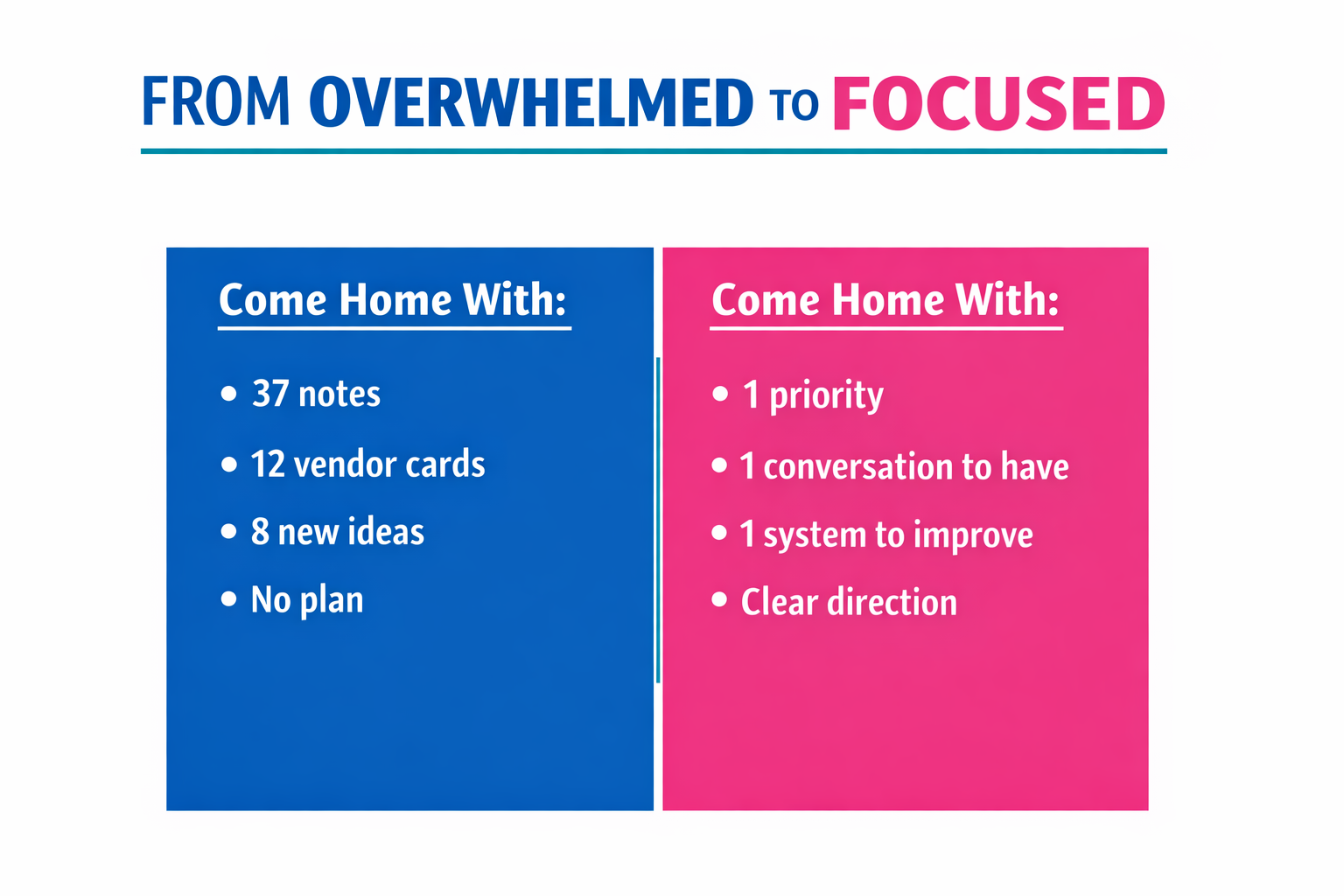
Turning Inspiration Into Structure
Inspiration fades.
Structure lasts.
Structure creates repeatable behavior. Repeatable behavior builds culture. Culture determines whether a conference idea becomes temporary motivation or permanent improvement.
If you want real value from early childhood leadership conferences, translate inspiration into systems.
Write expectations down.
Clarify decision-making boundaries.
Define measurable outcomes.
Without structure, conferences feel motivating but temporary. With structure, they become turning points.
If You Want Conferences to Support Long-Term Leadership
Professional development only creates lasting impact when it strengthens your leadership structure, not just your motivation.
A conference should help you see patterns in your own thinking. It should clarify where you are compensating instead of delegating. It should sharpen your awareness of which systems are working and which are quietly draining energy. If you leave energized but unchanged, the effect fades quickly. If you leave clearer about how you lead, that clarity compounds.
Long-term leadership is not built on constant new ideas. It is built on consistent alignment. Conferences are most helpful when they reinforce your direction rather than distract from it. They should help you refine what matters, not expand your workload.
When you attend with intention, you return not with pressure to implement everything, but with confidence about where to focus. That kind of clarity reduces noise. It strengthens decision-making. It makes leadership steadier.
That is what makes professional development sustainable.


